
How to tell if a tree is dead and needs removal
Learn how to tell if a tree is dead in Metuchen NJ. Spot dead tree signs, compare dormant vs dead trees, and know when to schedule removal before it becomes a hazard.
A dead tree in Metuchen NJ is one that has no living tissue in its trunk, branches, or roots and will not leaf out again - you can confirm it by testing for green under the bark, checking for brittle snapping twigs, and looking for fungal growth at the base. If those signs are present, the tree needs removal before it becomes a hazard. This guide walks you through the exact checks we use on service calls, explains how dead trees differ from dormant ones, and shows you when to stop guessing and call an arborist.
What Is a Dead Tree and Why It Matters in Metuchen NJ
How to tell if a tree is dead Metuchen NJ is a question of biology, not guesswork - a dead tree has stopped producing the living cambium layer that carries water and nutrients, and no amount of watering or fertilizer will bring it back. In our area, that matters more than in most places because Metuchen's mature oak, maple, and ash canopy sits close to homes, driveways, and power lines along streets like Main Avenue and Middlesex Avenue.
A dead tree loses structural strength from the inside out. The wood dries, cracks, and becomes brittle, and the root plate that once held it against nor'easters starts to decay. Once that happens, a 60-foot oak that survived Superstorm Sandy can drop a limb on a roof from a routine summer thunderstorm. We see it every year after the first heavy October wind.
If you are comparing options, our Tree Removal Metuchen NJ service covers everything from a single hazardous trunk to a full backyard cleanup, and we handle the permits and utility coordination that Metuchen requires for street trees.
How Do I Know If My Tree Is Dead in Metuchen NJ?
How to know if tree is dead Metuchen homeowners can answer in about five minutes with three field tests: the scratch test, the snap test, and the trunk test. Do them in that order - if two of the three fail, the tree is dead or dying and should be evaluated for removal.
The scratch test
Use a pocketknife or a key to scratch a small patch of bark on a lower branch, about the width of a quarter. Live wood underneath is green and slightly damp. Dead wood is brown, tan, or gray and feels dry and papery. Test two or three branches on different sides of the tree, because a tree can be partially dead and still push leaves on one side.
The snap test
Grab a twig about the thickness of a pencil and bend it. A live twig bends like a green stick and may strip a thin layer of bark before it breaks. A dead twig snaps cleanly with a dry crack and no stringy fibers. If every twig you try snaps, the branch is dead - and if that is true across the whole crown, the tree is too.
The trunk test
Look at the base of the trunk for mushrooms, conks, or a fan of white fungal growth. Those fruiting bodies mean decay has reached the heartwood, which is the load-bearing part of the tree. A hollow sound when you thump the trunk with a rubber mallet is another red flag. Trees with trunk decay near a house or driveway are the ones we remove first.
Dead Tree vs Dormant Tree in Metuchen: How to Tell the Difference
The dead tree vs dormant tree Metuchen question trips up more homeowners in late fall than any other, because a dormant deciduous tree looks completely bare from November through March. Dormancy is a survival strategy - the tree is alive, just shut down for winter. Death is permanent.
Here is how we separate the two on a November service call:
- Bud check: Dormant trees hold tight, plump buds at the tips of every twig. Dead trees have no buds, or buds that are shriveled and dry.
- Bark check: Dormant bark is intact and flexible. Dead bark peels in sheets, cracks vertically, or falls off in chunks.
- Branch check: Dormant branches flex under weight. Dead branches creak and snap.
- Base check: Dormant trees have firm, intact root flares. Dead trees often show a sunken or mushroom-ringed base.
Evergreens are easier. A healthy pine or spruce holds three or more years of green needles. If the inner needles are brown and dropping in October, that is normal fall shedding. If the outer needles on the branch tips are brown and the tree is dropping them in spring, that tree is in trouble.
If you are not sure which side of the line your tree is on, our team can look at it during a routine Tree Pruning Metuchen NJ visit and give you a straight answer before the next storm season.
Signs of a Dead Tree Metuchen New Jersey Homeowners Should Never Ignore
Dead tree signs Metuchen residents report most often are the ones that show up above ground, but the serious ones are usually at the base. Here is the full checklist we run through on every hazard evaluation.
- No leaves in season. A deciduous tree that is bare in June is dead or nearly dead. One bare branch is normal; a bare crown is not.
- Brittle, snapping branches. Dead wood breaks instead of bending.
- Peeling or missing bark. Large vertical cracks or sheets of loose bark expose the wood underneath.
- Fungal growth at the base. Mushrooms or conks on the root flare mean internal decay.
- A hollow trunk. A dull thud instead of a solid knock.
- Leaning trunk. A new lean of more than 15 degrees from vertical, especially after rain, means the root plate is failing.
- Heaving soil or exposed roots. Cracked ground on one side of the trunk is a sign the tree is starting to tip.
- Sawdust or frass. Fine powder around the base can mean insects are hollowing out the trunk.
- Dead branches in the upper crown. Deadwood over a roof or driveway is the single most common reason we get called.
If you check three or more of these boxes, treat the tree as a hazard and get it looked at this week, not next spring.
How Long Does It Take for a Dead Tree to Fall in Metuchen?
How long does it take for a dead tree to fall in Metuchen is impossible to answer with a single number, because it depends on species, size, soil, and wind exposure. What we can tell you is the pattern we see in Middlesex County: a dead tree can stand for five to ten years in a sheltered backyard, but a dead tree with trunk decay near a street or open lot often fails within one to three years.
Three factors speed up the timeline:
- Species. Silver maples, willows, and poplars rot fast - often within two to three years of dying. Oaks and hickories hold longer, sometimes a decade, but they are also heavier when they finally go.
- Soil moisture. Metuchen's clay-heavy soils hold water against the root flare, which accelerates decay. Trees in low spots near the borough's streams go first.
- Wind exposure. A tree on an open corner lot takes the full force of every nor'easter. A tree tucked between two houses is shielded.
The catch is that you cannot see root decay from the ground. A tree that looks solid in July can come down in the first October gale. That is why we treat any dead tree within striking distance of a structure as a removal candidate, not a wait-and-see.
What to Watch Out For: Common Mistakes When Assessing a Dead Tree
The biggest mistake we see is waiting too long because the tree still has a few green leaves. A tree can be 80 percent dead and still push a thin canopy on one side - that is a survival response, not a recovery. Do not let a handful of leaves talk you out of a removal.
Other mistakes:
- Cutting it down yourself. A dead tree is far more dangerous than a live one because the wood can shatter without warning. Every year, homeowners in New Jersey are injured trying to drop a dead trunk near a fence or power line.
- Assuming it will fall away from the house. Dead trees do not fall where you want them to. They fall where the decay and the wind send them.
- Ignoring the stump. A dead tree leaves a dead root system. If you do not grind the stump, you get suckers, fungal spread, and a trip hazard. Our Stump Grinding Metuchen NJ service takes the stump 6 to 12 inches below grade so you can replant or lay sod.
- Treating a dead tree with fertilizer or deep watering. Neither revives dead cambium. You are wasting money and delaying the real fix.
- Not checking for utility lines. Metuchen has overhead service drops to most homes. A dead tree leaning into a line is a call to PSE&G, not a chainsaw job.
When to Call a Professional for Dead Tree Removal in Metuchen NJ
Call a professional when the dead tree is within one and a half tree-lengths of your house, garage, driveway, or a power line, or when you see fungal growth at the base. That is the point where the risk of property damage outweighs the cost of removal.
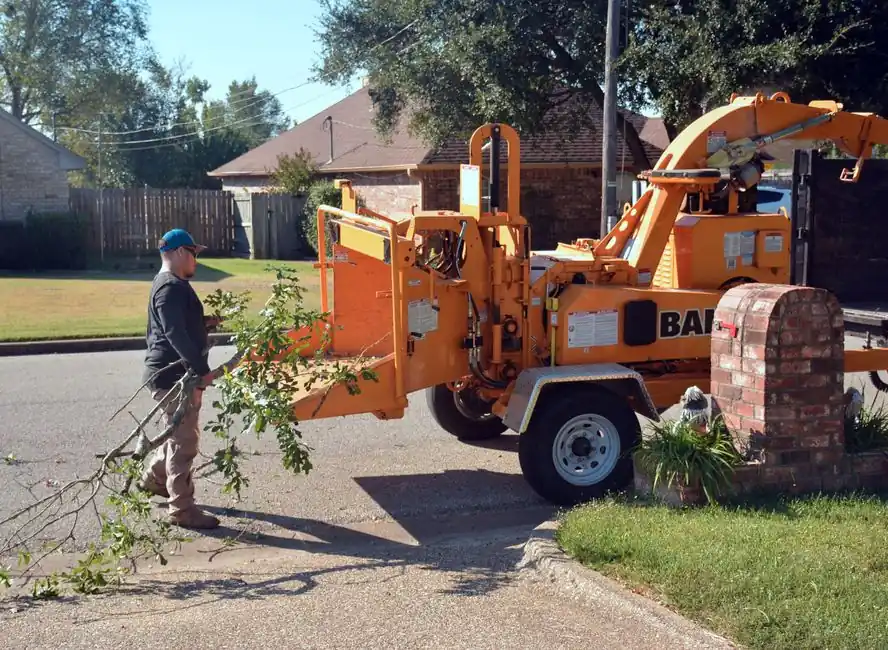
Our team at Treeminator Tree Service handles dead tree removal Metuchen NJ property owners need, from a single backyard oak to a full lot cleanup. We climb or use a bucket truck when the tree is over a structure, rig the limbs down in sections, and chip the brush on site. Typical 2026 pricing in this area runs $450 to $900 for a medium dead tree in an open yard, $1,200 to $2,800 for a large tree near a house, and $300 to $600 to grind the stump afterward. We give you the number before we start, and we leave the yard clean.
We also serve the surrounding towns, including Tree Service in Edison and Tree Service in Woodbridge, so if you are just over the Metuchen line, we can usually get to you the same week.
Frequently Asked Questions
How do I know if my tree is dead in Metuchen NJ?
Scratch a lower branch - live wood is green and damp, dead wood is brown and dry. Then snap a pencil-thick twig; if it cracks cleanly with no bending, that branch is dead. If the whole crown fails both tests and you see mushrooms at the base, the tree is dead.
Can a dead tree come back to life in Metuchen New Jersey?
No. Once the cambium layer dies, the tree cannot regrow it, and no fertilizer or watering will help. A tree that looks dead but leafs out in spring was dormant, not dead. If it is still bare in June, it will not recover.
How long does it take for a dead tree to fall in Metuchen?
It depends on species and decay. A dead silver maple or willow can fall in two to three years. A dead oak may stand five to ten years in a sheltered yard, but a tree with trunk decay near a structure often fails within one to three years. Do not wait on a tree near your house.
Should I remove a dead tree in Metuchen NJ?
Yes, if it is within one and a half tree-lengths of a home, driveway, or utility line, or if you see fungal growth at the base. Removal costs $450 to $900 for a medium tree in an open yard in 2026. The cost of a roof repair is far higher.
What is the difference between a dead tree and a dormant tree in Metuchen?
Dormant trees hold plump buds on every twig, flexible bark, and branches that bend under weight. Dead trees have no buds, peeling or cracked bark, and branches that snap. Dormancy runs November through March; death lasts year-round.
Get Help with Tree Service in Metuchen
If you have a dead tree you are not sure about, we will come out, run the same tests we use on every hazard call, and tell you straight whether it needs to come down. Our team provides Tree Service Metuchen NJ homeowners rely on for safe, insured dead tree removal and cleanup.
Call Treeminator Tree Service at +1 (732) 419-5574 to schedule a free on-site assessment. We will give you a written price before any work begins.