
When is the best time to prune trees in New Jersey
The best time to prune trees in New Jersey is late winter dormancy. Learn species-specific windows, summer limits, and when to call a Metuchen arborist.
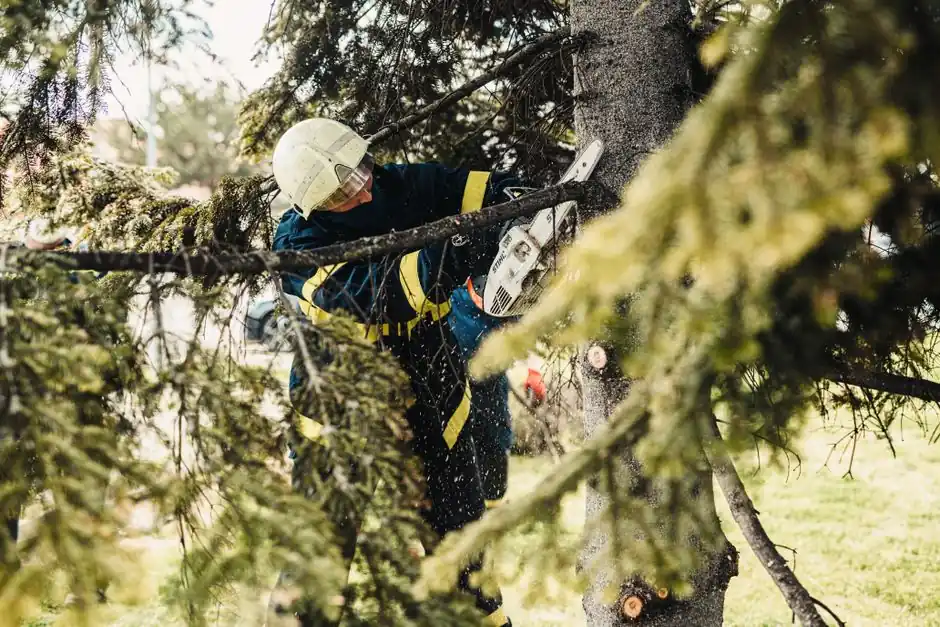
The best time to prune trees in New Jersey is late winter, from mid-February through early March, while trees are still dormant and before spring bud break. For most deciduous species-maples, oaks, elms, and shade trees common across Middlesex County-that narrow window delivers the fastest wound closure, the least stress, and the cleanest view of the branch structure you're cutting.
But "late winter" is not a blanket rule. Oaks have their own clock because of oak wilt risk, fruit trees peak at a different moment, and some species should only be touched in summer. Below we break down the exact timing by species, what happens when you prune at the wrong time, and how we handle pruning for homeowners right here in Metuchen.
The short answer: late winter dormancy
Tree pruning in New Jersey is a seasonal task that removes dead, damaged, or crossing branches to improve structure, safety, and airflow-and it works best when the tree is not actively growing. Dormancy in our region runs roughly from late November through March, but the sweet spot sits in the back half of that window.
Why late winter instead of early winter? Two reasons. First, by February the worst cold snaps have passed, so fresh cuts are less exposed to deep-freeze injury. Second, the tree is only weeks away from pushing new growth, which means it can seal its wounds almost immediately once spring arrives.
If you're scheduling Tree Pruning Metuchen NJ for a shade tree, aim for the last week of February or the first ten days of March. That's the window our crews block out first every year.
Why dormant pruning works best in New Jersey
Dormant pruning in New Jersey works because the tree's energy is stored in its roots and trunk, not in its canopy, so removing branches costs the tree almost nothing. Here's what's actually happening when you cut in late winter:
- No sap loss. Trees like maples and birches bleed heavily if cut in early spring. In February, sap is still down.
- Faster wound closure. The tree's natural defense chemicals are concentrated in the wood, and new growth in April seals cuts quickly.
- Visible structure. Without leaves, you can see every crotch, every included bark union, and every dead limb that needs to go.
- No pest attraction. Most insects and fungal spores are inactive, so open wounds aren't an invitation.
- Less disease spread. Dutch elm disease and oak wilt are both spread by beetles active in spring and summer-not February.
We've pruned trees in Metuchen for years, and the difference between a February cut and a June cut on the same species is visible within one season. Dormant cuts heal cleaner and the tree retains a better shape.
Species-specific pruning windows for NJ trees
Not every tree in Middlesex County follows the same schedule. Here's how we break it down by species you're likely to have in your yard:
Oaks
The best time to prune oak trees in NJ is late winter, specifically February, when the sap beetle that spreads oak wilt is inactive. Oak wilt is a fatal fungal disease, and fresh cuts made from April through October are the primary entry point. If you have a mature red or pin oak, do not let anyone touch it in summer.
Maples
Prune maples in late winter, after the heaviest freezes but before sap starts running in earnest. If you cut a maple in early March during a warm spell, you'll get sap bleeding-messy but rarely fatal. Wait for a cold snap to pass.
Fruit trees
When to prune fruit trees in New Jersey: late winter, February into early March, before buds swell. Apples, pears, and cherries respond well to dormant structural pruning. Peaches and nectarines are slightly more sensitive-prune them just as buds begin to show color, which in our area is usually mid-March.
Flowering trees (dogwood, crabapple, cherry)
Prune spring-flowering trees immediately after they bloom, not in winter. If you cut them in February, you're removing the flower buds that set last fall. For dogwoods and crabapples, that means late May or early June.
Evergreens (pine, spruce, fir)
Pines should be pruned in late spring or early summer, when new growth (candles) is soft. Spruce and fir can be shaped in late winter or early spring. Avoid pruning evergreens in late summer-new growth won't harden off before frost.
Can you prune trees in summer in NJ?
Yes, you can prune trees in summer in NJ, but limit it to corrective or emergency work-deadwood removal, storm-damaged limbs, or branches rubbing a roof. Summer pruning does not stimulate the same vigorous regrowth as dormant cuts, so it's useful for slowing a tree down or thinning a canopy that's too dense.
The catch: open wounds in July and August are exposed to insects, fungal spores, and heat stress. If you must prune in summer, keep cuts small and avoid removing more than 10-15% of the live canopy. For anything larger, wait until February.
One exception: if a limb is cracked and hanging over your driveway, that's not a seasonal decision. That's a safety call. Our team handles Emergency Tree Service Metuchen NJ year-round for exactly this reason.
What happens if you prune trees at the wrong time in New Jersey
Pruning at the wrong time in New Jersey can kill a tree, invite disease, or cost you a season of flowers. The specific risks depend on species and season:
- Oak wilt: Pruning oaks between April and October can attract sap beetles carrying the fungus. Once infected, red oaks often die within months.
- Sap bleeding: Maples, birches, and walnuts cut in early spring lose sap heavily. It's rarely fatal but stresses the tree and looks alarming.
- Flower loss: Pruning spring bloomers in winter removes the buds that would have opened in April and May.
- Winter injury: Cutting in December or January exposes wounds to deep freeze, delaying closure until spring.
- Pest entry: Summer cuts on stressed trees are open doors for borers and canker fungi.
We've seen Metuchen homeowners lose mature oaks to oak wilt after a well-meaning summer trim. It's a preventable mistake, and it's why we ask about species before we schedule anything.
Common pruning mistakes we see in Metuchen
The most common pruning mistake in Metuchen is cutting at the wrong time of year for the species-usually a summer oak trim or a winter cut on a spring-flowering dogwood. Beyond timing, here's what we correct most often:
- Flush cuts. Cutting a branch flush against the trunk removes the branch collar, the tree's natural healing zone. Always leave the collar intact.
- Topping. Cutting the main leader back to a stub forces weak, upright regrowth that breaks easily in storms. Never top a shade tree.
- Over-pruning. Removing more than 25% of the live canopy in one season starves the tree and triggers stress sprouts.
- Painting wounds. Tar and wound paint trap moisture and slow healing. Modern arboriculture says leave the cut clean and unpainted.
- Pruning without a plan. Random cuts create weak structure. Every cut should have a reason: dead, damaged, crossing, or competing.
If you're not sure whether a branch should stay, that's a good sign it's time to call someone who climbs trees for a living. We do this daily across Edison tree service and the surrounding towns, and the same mistakes show up everywhere.
When to call a professional
Call a professional when the branch is thicker than your wrist, when the tree is taller than your ladder, or when you can't identify the species. Those three conditions cover about 90% of the pruning jobs we get called for in Metuchen.
We handle the climbing, the rigging, and the cleanup. Our team at Treeminator Tree Service carries the saws, ropes, and insurance to prune a 60-foot oak over a roof without putting anyone on a ladder. If you're looking for tree trimming in Metuchen New Jersey that follows ANSI A300 standards, we can walk your property and tell you exactly what needs cutting and when.
We also handle the debris. You won't come home to a driveway full of branches.
Frequently Asked Questions
When should you prune trees in New Jersey?
Prune most shade and ornamental trees in late winter, mid-February through early March, while dormant. Oaks must be pruned in that window to avoid oak wilt. Spring-flowering trees should be pruned right after they bloom, typically late May to early June.
Can you prune trees in summer in NJ?
Yes, but limit summer pruning to dead, damaged, or dangerous limbs. Avoid pruning oaks from April through October due to oak wilt risk. Summer cuts on other species are fine if you remove less than 10-15% of the live canopy.
What happens if you prune trees at the wrong time in New Jersey?
Wrong-time pruning can cause sap bleeding, remove flower buds, expose wounds to freezing or insects, and in oaks, introduce fatal oak wilt. The tree may survive, but it spends energy healing instead of growing, and you may lose a season of blooms.
How often should you prune trees in Metuchen NJ?
Most mature trees in Metuchen need pruning every 3-5 years. Young trees benefit from structural pruning every 2-3 years to build strong branch unions. Fast-growing species like silver maple may need attention every 2 years.
Is it OK to prune trees in October in New Jersey?
October is not ideal for most species. Wounds won't close before winter, and oaks are still in the oak wilt risk window through October. Wait until February for oaks and most shade trees. Light deadwood removal in October is acceptable.
Get help with Tree Service in Metuchen
If you're not sure when your trees were last pruned-or you've spotted dead limbs, crossing branches, or a canopy that's gotten too dense-we'll take a look and tell you exactly what's needed. Our team provides Tree Service Metuchen NJ with upfront pricing and no pressure.
Call Treeminator Tree Service at +1 (732) 419-5574 to schedule a pruning assessment. We'll tell you the right month for your species before we ever put a saw to wood.